
Lead Generation META
Cost per lead down 33% in a week. Nothing about the ads changed.
CHANNEL: META ADS PERIOD: ONE WEEK DATES: 16–22 SEP VS 23–29 SEP 2024
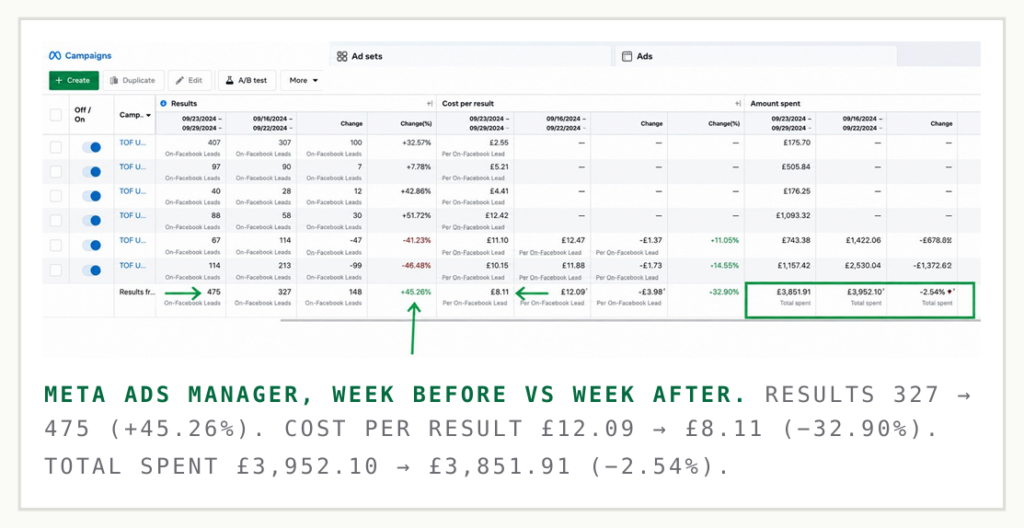
£12.09 → £8.11
COST PER LEAD, DOWN 32.90%
327 → 475
LEADS GENERATED, UP 45.26%
−£100
TOTAL SPEND, SLIGHTLY LOWER
(−2.54%)
£1,891
SAVED VS BUYING 475 LEADS AT
THE OLD CPL
The Problem Nobody Could Explain
A campaign with strong history started getting more expensive after a budget increase. No drop in click-through rate. No spike in CPM. No creative fatigue. Just a cost per lead that kept climbing.
The industry reflex in this situation is always the same: “your creative is tired, refresh it.” That was not the problem.
Our read was that Meta had interpreted the budget increase as a signal that this advertiser could afford more expensive leads, and had adjusted its bidding accordingly.
What We Changed
We moved half the account onto cost caps and bid caps, a strategy most advertisers avoid because it can throttle delivery if set badly. We set a hard target of £10 per lead and left everything else untouched: same ads, same targeting, same copy, same offers.
WHY IT WORKED
Caps stopped the algorithm chasing inflated auction prices and anchored it to a real business number instead of an assumed budget tolerance. 148 more leads, slightly less spend, in the same week.
THE HONEST CAVEAT
Cost caps are not right for every account. Set too aggressively they suppress delivery entirely. This was the correct lever for this specific problem, not a universal tactic, and we would not apply it blindly elsewhere.